Reverse Line Movement: What It Means, Why It Happens and How to Spot It
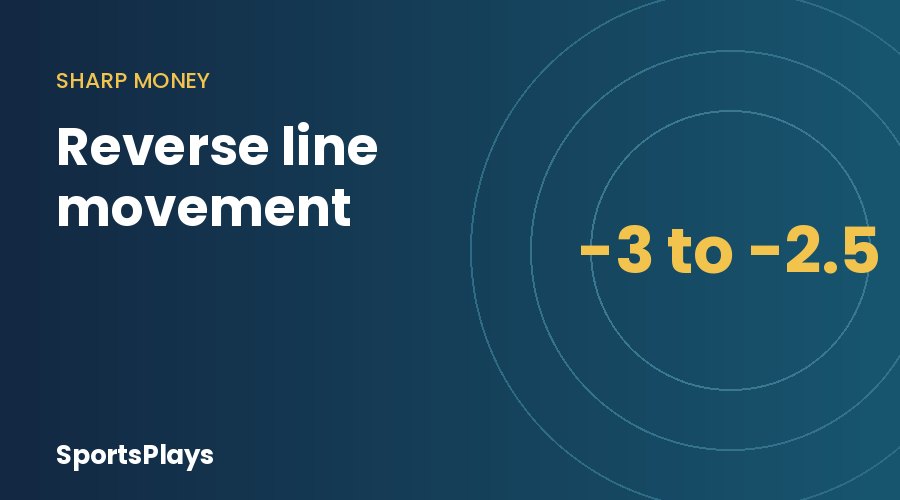
Reverse line movement (RLM) is when a betting line moves in the opposite direction from where the public betting would push it. Most bettors are on one side, yet the sportsbook makes that side cheaper, which usually means bigger, respected bets are coming in on the other team.
Books normally move a line to slow down the side taking the most action. So when 75% of the picks are on a favorite at -3 and the line drops to -2.5, something other than ticket count is driving it. That something is usually sharp money. Not always, though, and the exceptions are where people get burned.
What reverse line movement looks like
Say the Harbor City Hawks open as 3 point favorites over the Ridgeview Rams. Through the week, three out of every four picks are on the Hawks. If the sportsbook were just balancing tickets, you'd expect the line to go to -3.5 to push new bettors toward the Rams.
Instead it goes to -2.5. The book is now asking Hawks bettors to lay less, even though nearly everyone already wants the Hawks. The only reason to do that is that the book thinks the Rams side is the dangerous one to take money on. That's reverse line movement.
Totals work the same way. The Lakeport Lynx and the Granite Falls Grizzlies open at 47.5, and 70% of the picks are on the Over. The total drops to 46.5. Most bettors want points, and the number moved against them anyway.
Moneylines too. In a hockey game, 68% of picks are on the Northgate Knights at -160 against the Cedar Bay Comets. By puck drop the Knights are -145 and the Comets have gone from +140 to +125. The popular favorite got cheaper and the underdog's payout shrank. Money showed up on Cedar Bay, and it wasn't the public's.
Why reverse line movement happens
A sportsbook doesn't weigh every bet the same. Ten thousand $20 tickets on the Hawks matter less to a book than a few large wagers from bettors with a long record of beating the closing line. Those professional bettors, and the betting syndicates that pool money and models, are the people books listen to. When they hit the Rams at +3, the book moves the line even if the ticket count says the opposite.
There's also book risk. Sportsbooks adjust their lines to manage what they could lose, and that comes down to dollars, not tickets. If the Hawks have 75% of the bets but the Rams have most of the money, the book's exposure is on the Rams, so the line moves toward Hawks bettors. A handful of big bets can outweigh thousands of small ones. That gap between bets and money is the whole reason reverse line movement exists.
Books also copy each other. When one sharp, high limit market moves, the others tend to follow within minutes. That's why you'll often see the same move across multiple books at once, which is a stronger sign than one book acting alone. We go further into who these bettors are and how they bet in our guide to sharp money.
How to spot reverse line movement
You need two things: which side the public is on, and how the line has moved since it opened. Neither one means much without the other.
For the first part, our consensus pages show the share and number of picks on each side of the spread, total and moneyline for every game, with the side most players are on highlighted. Check the nba betting splits on a busy night, or the nhl public betting page for hockey, and you'll see right away which teams are the popular ones. Betting percentages near 52/48 tell you nothing. A 70/30 or 80/20 split is where a line move starts to mean something.
For the second part, write down the opening line, or note it the first time you see the game, then compare it with the current number. The consensus pages also show the best price at several sportsbooks, which helps you tell a market wide move from one book being out of line. Our piece on how to interpret line movement walks through tracking an NFL line throughout the week, from the opening line to kickoff.
Then put them together. A lopsided split, plus a line that moved toward the unpopular side, is your RLM alert. Here's a quick way to keep it straight:
| Public side | Line move | What it means |
|---|---|---|
| 75% on Hawks -3 | Hawks -3.5 | Normal: the book is slowing down the popular side |
| 75% on Hawks -3 | Hawks -2.5 | Reverse line movement: money on the Rams |
| 70% on Over 47.5 | 46.5 | Reverse line movement: money on the Under |
| 68% on Knights -160 | Knights -145 | Reverse line movement: money on the Comets |
One more thing to watch: the price can move without the number moving. If the Hawks stay at -3 but go from -110 to -102 while the Rams go from -110 to -118, that's a line shift too, just a smaller one.
Why it's a clue and not a guarantee
Reverse line movement tells you where respected money went. It doesn't tell you who wins. Sharp bettors lose a lot of bets; they just win a few more than they need to over a long season. Following their side hands you their small edge at best, and only if you get a similar number.
That last part is the catch. By the time you notice the Hawks went from -3 to -2.5, the sharp bettors already took the Rams at +3. You're getting +2.5, and in the NFL that half point across 3 is worth a lot, so the move itself ate much of the value. This is why sharp bettors care about getting a better price than the close more than about any single result: the people who caused the move got the good price, and the people chasing it usually didn't.
We'd use RLM the way you'd use a second opinion. If you already like the Rams after doing your own handicapping, seeing the line move your way is reassuring. If you had no opinion and the only reason to bet is the line move, think about whether you're betting the game or betting someone else's bet.
False signals
Plenty of line movements look like reverse line movement and aren't sharp money at all.
News is the big one. If the Hawks' starting quarterback is ruled out on Friday, the line drops no matter where the public is. Injury reports, a goalie change, a star resting in the second game of a back to back, or weather changes like heavy wind at an outdoor game can all move a number against the popular side. Check the news before you read anything into the move.
One book isn't the market. A single sportsbook might shade its line because it's taking too much on one side from its own customers, or it just hasn't caught up. If the move isn't showing up elsewhere, be careful.
Small samples fool people. A split built on 40 picks can swing hard on a few people. Our consensus pages show the number of picks next to the percentage for exactly this reason, so look at both.
Ticket share isn't money share. Our pages show the share of picks, which tells you the public's side. It doesn't show how much was bet. Most of the time the public's side and the public money are the same side, but RLM is really a guess about where the big money went, and you're inferring it from the line.
And lines move back. A line can drop from -3 to -2.5 on early sharp action and get bet back up to -3 the day of the game by a different group of sharp bettors who liked the favorite at the lower number. Where the line ends up at kickoff is a better read than any one move during the week.
Should you follow or fade the public?
RLM is the reason a lot of bettors decide to go against the crowd, but betting against the public just because it's the public is its own trap. Popular sides win plenty of games. The useful version is narrower: when the public is heavily on one side and the market moves the other way, that's a game worth a closer look. We cover when going against the crowd makes sense, and when it doesn't, in our fade-the-public guide.
Our Expert Picks page adds another angle, showing games where the betting public and our streak players disagree. Put that next to a lopsided split and a line moving the other way and you've got a short list of games to handicap properly.
If you want to practice reading these spots without risking anything, SportsPlays is free to play: no deposit, no credit card, a Free Bet Balance on real lines from major sportsbooks, and free contests with cash prizes. Watch the splits, note the opening line, make your pick, and see over a few hundred games whether RLM actually helps your record. That's how you find out if it works for you, and it's a lot cheaper than finding out with real money.
SportsPlays is for players 21 and over. Gambling problem? Call 1-800-GAMBLER.
FAQ
Is reverse line movement good or bad?
Does reverse line movement work?
Can reverse line movement happen on totals and moneylines?
Which sports have the most reverse line movement?
Build a streak today
15 in a row = $100 · 21 in a row = $1,500 · Free to play.
 Sharp Money Betting: What Sharp Money Is, How to Spot It and Where It MisleadsOctober 19, 2026
 Fade the Public: What It Means and When Betting Against the Public WorksOctober 18, 2026